
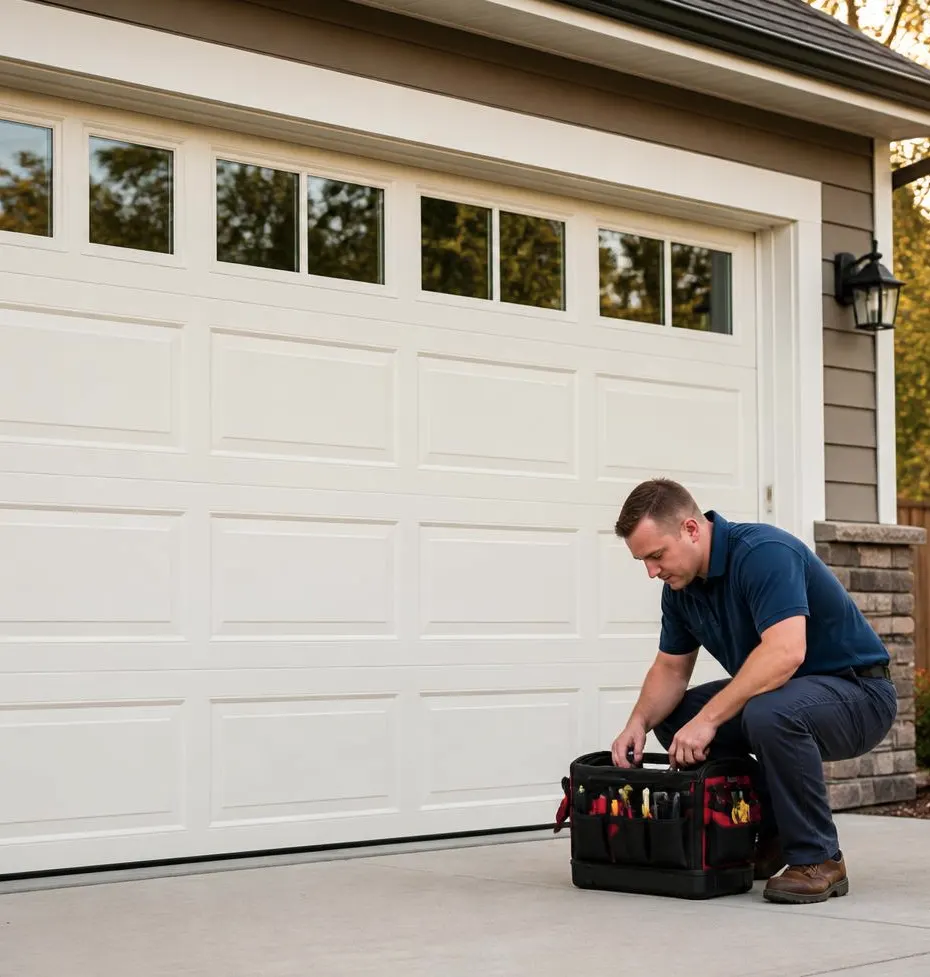
The Mistake Most People Make First
Every October, the same thing happens: a homeowner notices their garage door squeaking, grabs a can of WD-40 from the shelf, sprays the hinges and rollers, and calls it winterized. It's tempting because it's fast, cheap, and the squeak usually goes away for a week or two. The problem is that WD-40 is a solvent, not a lubricant. It strips old grease and dust off the moving parts, which quiets things down temporarily, but it leaves metal-on-metal contact underneath. Once a hard freeze hits and that thin film dries out, the noise comes back worse, and the hardware wears faster. Spraying something on the hinges isn't winterizing a garage door. It's a band-aid.
Why This Stretch of Tennessee Is Hard on Garage Doors
Clarksville and the surrounding area don't get a clean, dry transition into winter. Summer humidity lingers into fall, heavy rain shows up with little warning, and pine trees around a lot of properties shed sap, needles, and moisture right into garage tracks. Then, without much warning, an ice storm rolls through and the temperature swings from humid and mild to well below freezing in a day or two. That swing is the real enemy. Wood and composite panels that absorbed moisture all fall can crack or warp once they freeze. Metal hardware that's been sitting in damp air starts to rust at the stress points, and springs under constant humidity cycles lose tension faster than they would in a drier climate. None of this shows up as a dramatic failure right away. It shows up as a door that's a little harder to lift, a little louder, a little slower to respond, until one cold morning it doesn't open at all.
Check the Weatherstripping Before You Touch the Hardware
The bottom seal and the side weatherstripping are doing more work than most homeowners realize. They're the only thing keeping cold air, moisture, and small pests out of the garage. Walk around the door and look for cracking, flattening, or gaps where the seal has pulled away from the panel. Press your fingers along the bottom seal; if it's stiff and doesn't spring back, it's past its useful life. A gap as small as a quarter inch along the bottom can let in enough cold, damp air to affect anything stored near the door, and it gives moisture a direct path to the floor where it can pool and freeze. Replacing weatherstripping is inexpensive compared to most other garage door repairs, and it's one of the few jobs a homeowner can reasonably do without special tools.
Inspect Springs, Cables, and Rollers for Real Wear
Instead of lubricating first, look first. Check the springs for gaps in the coils or visible rust, especially if the garage isn't fully enclosed or sealed from outside humidity. Look at the cables on either side of the door for fraying strands, particularly near the bottom where they wrap around the drum. Rollers should move smoothly in the track with no wobble or grinding. If you see rust forming on any of this hardware, it's a sign that moisture has already been getting in, which is common after a wet Tennessee summer.
Once you've actually inspected the parts, lubrication makes sense as the next step, not the first one. Use a silicone-based or lithium grease lubricant made for garage doors, not a general household spray. Apply it to the rollers, hinges, and the spring itself, then wipe away the excess so it doesn't collect pine debris or dust that blows in with heavy rain.
Don't Ignore the Opener and Sensors
Cold weather affects the opener too. The photo-eye sensors near the bottom of the tracks can get knocked out of alignment or fogged up by humidity, which causes the door to reverse unexpectedly or refuse to close. Wipe the sensor lenses clean and make sure both are pointing directly at each other. If your opener has a battery backup, check it now; battery performance drops in cold temperatures, and a dead backup during a winter power outage from an ice storm means a garage door that's stuck in whatever position it's in.
Look at the Panels and the Track for Debris
Pine needles, sap, and wet leaves tend to build up in the tracks during fall, especially on properties with mature trees nearby. This debris can cause the door to bind or run unevenly, putting extra strain on the opener and the springs. Clear the tracks out with a brush and a damp cloth, and while you're at it, check wood or composite panels for soft spots, swelling, or small cracks that formed during the humid months. These are easier and cheaper to address now than after a freeze turns a small crack into a bigger structural problem.
When to Call Clarksville Overhead Garage Door
If you've gone through these checks and found worn cables, a spring with visible rust or gaps, or a door that's noticeably harder to lift than it used to be, that's past the point of DIY maintenance. Our Preventive Maintenance service covers a full inspection of springs, cables, rollers, and opener function before winter weather puts more strain on worn parts. If a spring looks compromised, don't try to replace it yourself; under tension, a failing spring can cause serious injury. Our Spring Replacement service handles that safely, with the right spring weight for your door. And if the tracks are bent or the door is running off-center, our Cable & Track Repair team can realign everything before an ice storm turns a minor misalignment into a door that won't move at all.
If your garage door needs attention before winter sets in, call Clarksville Overhead Garage Door. We serve homeowners throughout Clarksville, Fort Campbell, Sango, St. Bethlehem, Woodlawn, Palmyra, Pleasant View, and Oak Grove, and we'd rather fix a small issue in October than get an emergency call during the first hard freeze.